

Build Community. Build Power.
The real divide isn’t left versus right. It’s whether power serves people or wealth.

For most of my life, I understood American politics as a contest between the left and the right. Democrats and Republicans disagreed about taxes, regulation, social programs, and the role of government. Elections were fought along ideological lines, and voters chose the side that best reflected their beliefs.
Those differences still matter.
But they no longer describe the most important divide in American life.
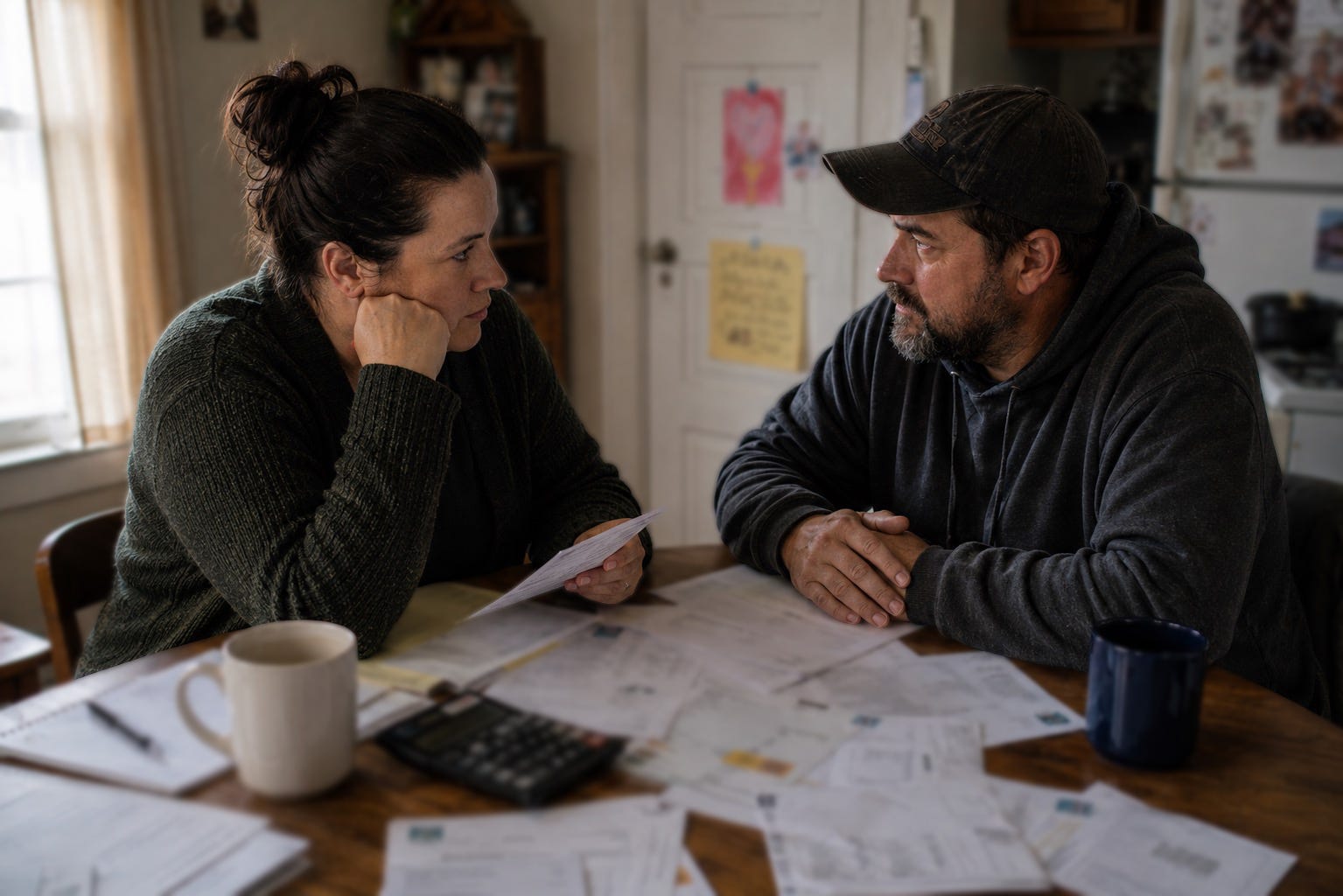
A public school teacher burdened by student debt and a skilled tradesman struggling to keep up with rising costs may disagree on a dozen political issues. Yet both face the same housing market, the same healthcare system, the same insurance premiums, the same utility bills, and the same uncertainty about the future. Both wonder whether their children will enjoy the opportunities they once expected. Both feel vulnerable in ways that previous generations did not.
For decades, our politics focused on what separated people like this. Today, the more important question is what unites them.
The problems confronting working people are not mysterious. Healthcare costs continue to rise. Housing is increasingly unaffordable. Families live one layoff, illness, or accident away from financial hardship. Meanwhile, large financial institutions grow larger, technology billionaires wield unprecedented influence, powerful corporations shape policies that affect millions of lives, and organized domestic and foreign interests exercise levels of political influence that ordinary citizens can rarely match.
Many of these institutions are supposed to be overseen by a government of, by, and for the people. Yet to ordinary citizens, it often appears that the relationship works in the opposite direction.
This is why so many voters have become frustrated with politics as usual. It is not because elections do not matter. They do. The differences between Obama, Trump, and Biden were real and consequential. But focusing only on those differences can obscure a deeper reality: regardless of which party holds power, many of the forces shaping everyday economic life remain remarkably insulated from democratic accountability.
As a result, voters are asking a different question than they once did. Not simply what does a candidate believe, but who does that candidate answer to?
That helps explain the appeal of candidates who build support from the ground up rather than from the top down. People are less interested in political labels than they are in the source of a candidate’s power. They want leaders who spend more time talking to voters than courting donors, consultants, lobbyists, and party insiders.
I consider myself a centrist. I do not agree with every position these candidates take. But I recognize something important in the way they approach politics. They understand that power built through relationships is fundamentally different from power built through money.
I also understand why this shift can be difficult to see. Many people have spent decades supporting mainstream candidates and institutions because they sincerely believed those institutions could deliver a more just and prosperous society. I make no judgment of them. In many ways, I count myself among them.
But institutions create inertia. Strategies that once made sense can become assumptions that survive long after circumstances have changed.
The central divide in American politics is no longer left versus right.
It is whether power flows upward toward concentrated wealth and institutions, or outward toward citizens and communities.
People who work for a living, raise families, pay bills, and contribute to their communities have more common interests than our politics often acknowledges. They want economic security. They want a meaningful voice in decisions that affect their lives. They want freedom from constant financial anxiety and confidence that hard work will be rewarded with dignity and opportunity.
Those aspirations are neither liberal nor conservative.
They are human.
The challenge before us is not merely to elect different people. It is to build a different source of political power—one rooted in citizens rather than money, communities rather than institutions, and accountability rather than access.
Before voters decide what a candidate believes, they increasingly want to know who that candidate serves.
That is the political realignment of our time.
—John DeSpelder, President, Traverse Indivisible